

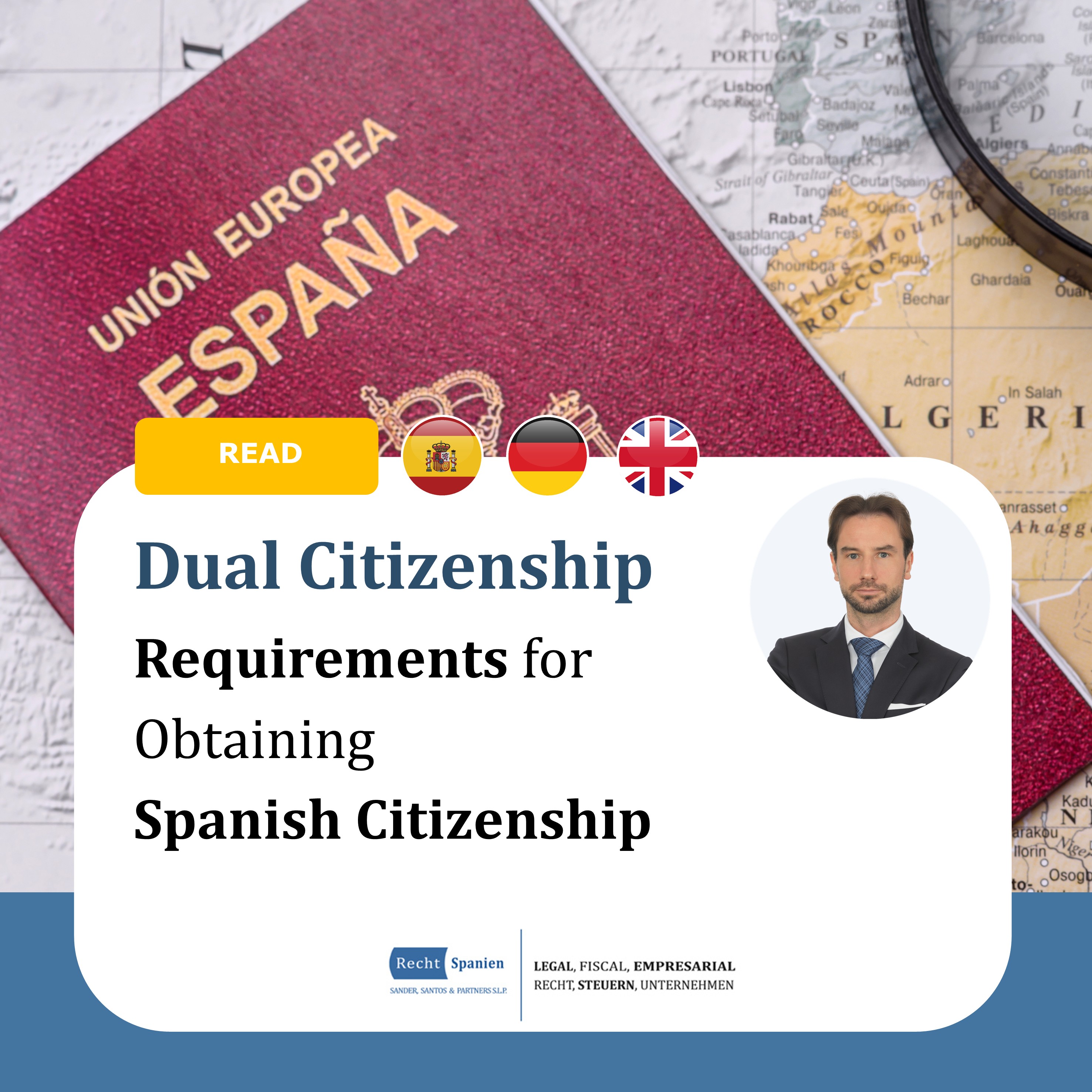
German citizens living in Spain generally have the possibility of acquiring Spanish citizenship through permanent residence in Spain. Although German citizenship is no longer lost upon acquiring Spanish citizenship, certain aspects must be taken into account in order to retain the newly acquired Spanish citizenship alongside German citizenship.

Anyone planning a longer stay in Spain or wishing to move to Spain will need to apply for an N.I.E. In Spain, the N.I.E. serves as a tax identification number and is therefore required for virtually all administrative procedures. Although the N.I.E. is often mistakenly equated with the term “Residencia”, the N.I.E. is simply your personal tax and identification number.
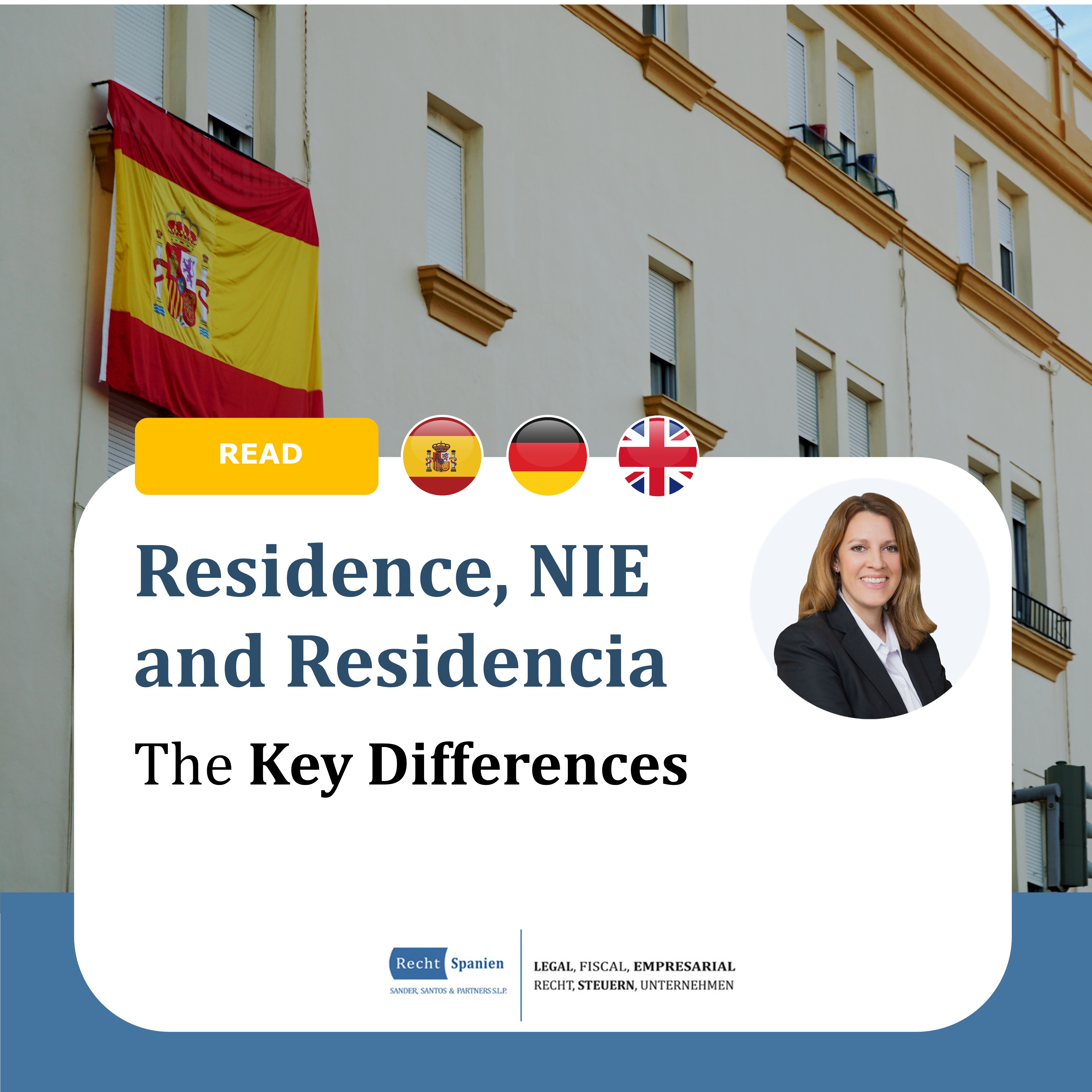
Anyone living in Spain will sooner or later come across terms such as stay, residence, N.I.E., Residencia, etc. Understanding the differences between these concepts is particularly important in order to complete the various administrative procedures, registrations and formalities in due time and avoid missing any applicable deadlines.

Thanks to the digital certificate (certificado digital), a large number of administrative procedures can be carried out online from home. For example, tax advisers and lawyers can be appointed, tax returns can be filed, certificates from the municipal register can be obtained or the status of Social Security contributions can be checked. Spain is one of the most advanced EU Member States in the field of electronic public administration.
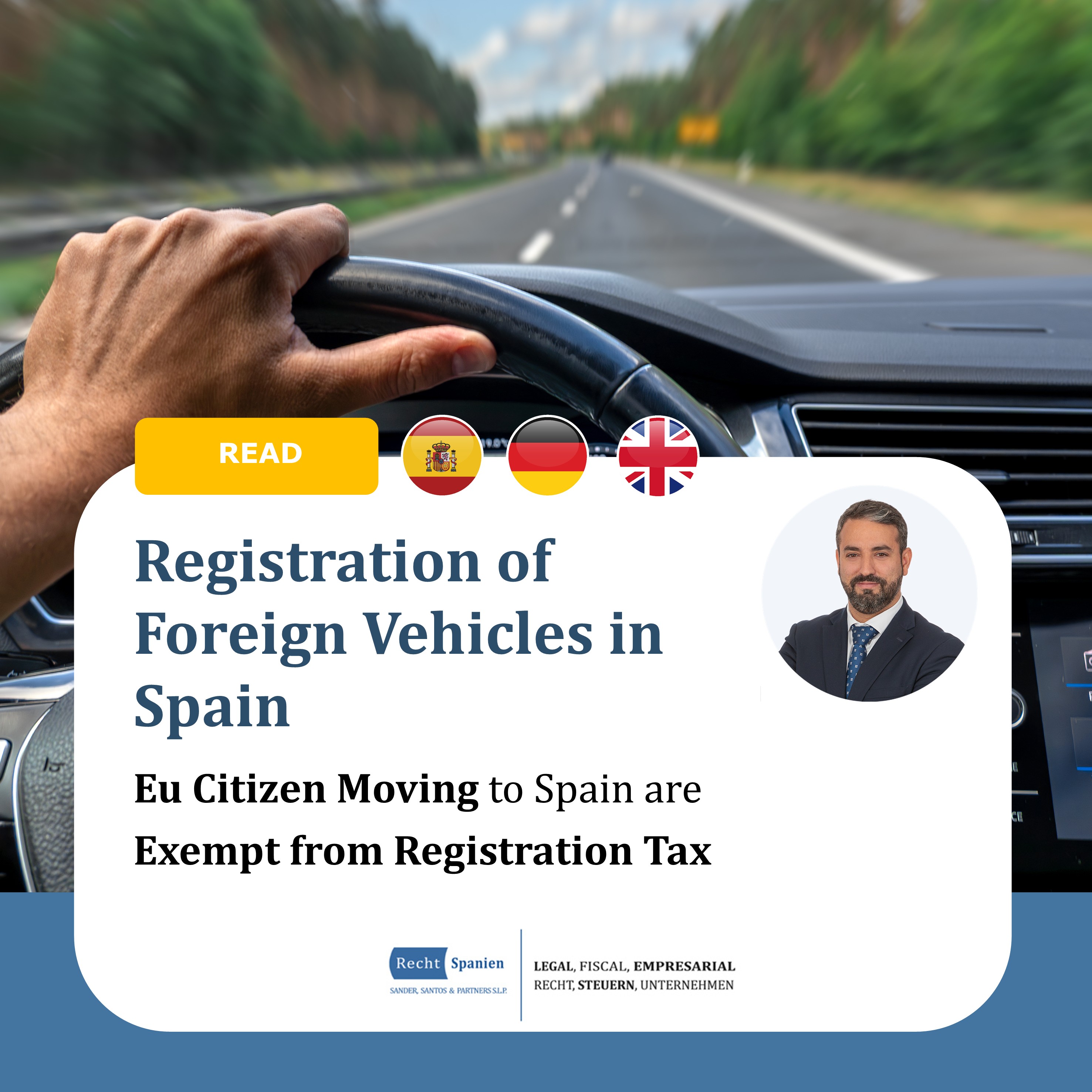
After obtaining Spanish “Residencia” and registering with the local municipal register, many people moving to Spain wonder whether and how they can register their German vehicle in Spain. In this article, we provide information on the administrative procedures to be carried out with the Spanish Tax Agency, the local council and the Spanish traffic authority, as well as on the deadline for applying for an exemption from registration tax, which in many cases can result in savings of more than €1,000.

Since the beginning of 2013, German citizens living in Spain have been able to deal with matters relating to both their German identity cards and passports directly through the competent German diplomatic mission or consular office. Although passport applications can also be submitted to honorary consuls, matters relating to German identity cards must be handled by one of the following consulates.
In Spain, all economically active persons are compulsorily covered by the public healthcare system. As the system is financed through taxation rather than individual health insurance contributions, the healthcare benefits provided are generally the same for everyone. You are covered from the date of registration; however, in order to obtain your Spanish health card, you must apply for it at the healthcare centre (Centro de Salud) corresponding to your place of residence. Once you are registered, eligible family members may also be included as beneficiaries without additional contributions.
Obtaining Spanish “Residencia” has been subject to certain requirements since 2012 (pensioners, students, employees, self-employed persons, family members of residents, etc.) and is often confused with obtaining a Spanish N.I.E. number. However, there are important differences between the two, both from a tax and an administrative perspective.
Until 2013, holders of a German driving licence residing in Spain could use their licence to drive throughout Spain without any particular restrictions. Since the beginning of 2013, however, a restriction has applied which primarily affects German citizens permanently residing in Spain and which, in certain cases, requires the exchange of the driving licence.
In Spain, as in Germany, the law requires motor vehicles to undergo periodic roadworthiness and emissions inspections. In Spain, this vehicle inspection is known as the ITV (Inspección Técnica de Vehículos) and may only be carried out at authorised ITV inspection stations, which vehicle owners are free to choose.
Under current Spanish law, every individual residing in Spain must register with the municipal population register (Padrón). Registration is particularly important for tax matters, voting in European and municipal elections, administrative procedures, as well as for determining the jurisdiction of the German Embassy in Spain.

Spain is one of Europe's most popular holiday destinations and one of the countries with the highest number of restaurants. Although Spanish legislation provides a high level of consumer protection, tourists as well as residents can sometimes face unfair charges simply because they are unaware of their consumer rights when eating or drinking in bars and restaurants.

Using your digital certificate, you can appoint us as your authorised representative before both the Spanish Tax Agency (AEAT) and Social Security (TGSS). If you do not yet have a digital certificate, our law firm can arrange one for our clients.

In addition to elections to the European Parliament, municipal elections are the only elections in which German citizens living in Spain are also entitled to vote. However, in order to exercise this right to vote, it is necessary to submit a formal declaration of your intention to vote in Spain.

N.I.E., municipal registration (Empadronamiento), vehicle registration, Social Security, driving licence exchange... Which administrative procedures need to be completed and when? Below you will find information on the most important administrative procedures, which in most cases can also be completed voluntarily before the indicated deadline.


 (+34)
(+34)