

Due to the free movement of persons and capital within the European Union, cross-border inheritances have become increasingly common. In order to determine whether an inheritance is subject to taxation in Germany, Spain or both countries, various factors must be taken into account, such as the residence of the deceased.
A cross-border inheritance arises whenever the estate includes assets located in different countries or when the deceased and the heirs are resident in different countries. Although a significant proportion of inheritances now involve a cross-border element, there are very few double taxation agreements specifically covering inheritance tax. To date, for example, there is no specific inheritance tax treaty between Spain and Germany. Consequently, both countries independently determine who is subject to inheritance tax within their respective jurisdictions.
Who has to pay inheritance tax and where?
In both Spain and Germany, the person liable for inheritance tax is generally the heir. In order to determine whether an inheritance is taxable in Germany, Spain or both countries, various factors must be considered, including the residence of the deceased, the residence of the heir and the nature and location of the inherited assets. Tax liability may therefore arise on the basis of personal circumstances relating to the taxpayer or on the basis of the location and nature of the inherited assets.
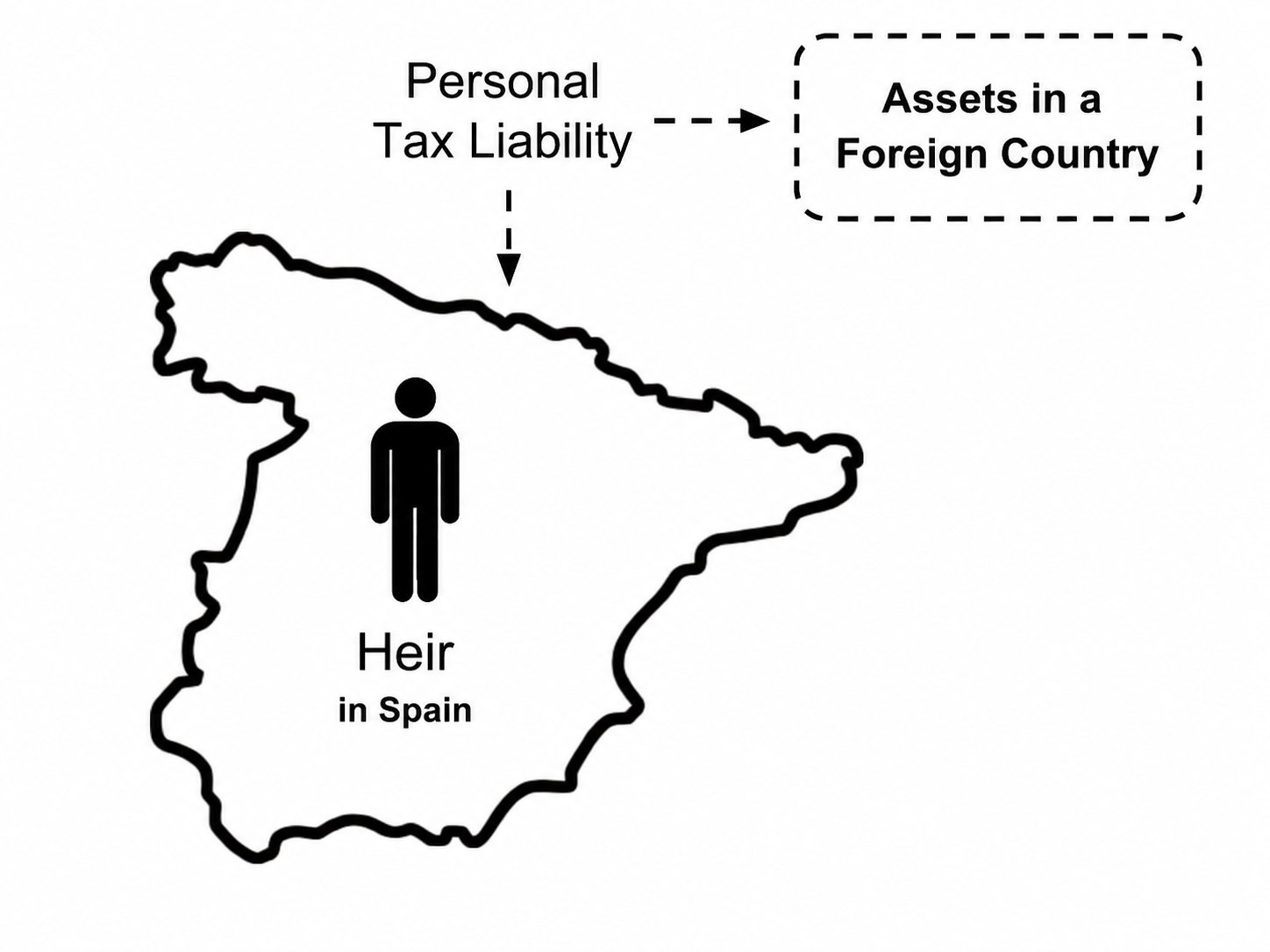
a) Under the taxpayer-related personal tax liability (obligación personal), the heir is generally subject to inheritance tax in the country of residence, irrespective of nationality. In determining whether a person is tax resident in Spain, the applicable Spanish tax residence rules must be taken into account. Where the deceased was resident in Spain, the applicable regional tax legislation is determined on the basis of the relevant connecting factors. Where the deceased was resident abroad, the applicable rules must be determined in accordance with the statutory provisions governing the relevant Autonomous Community.

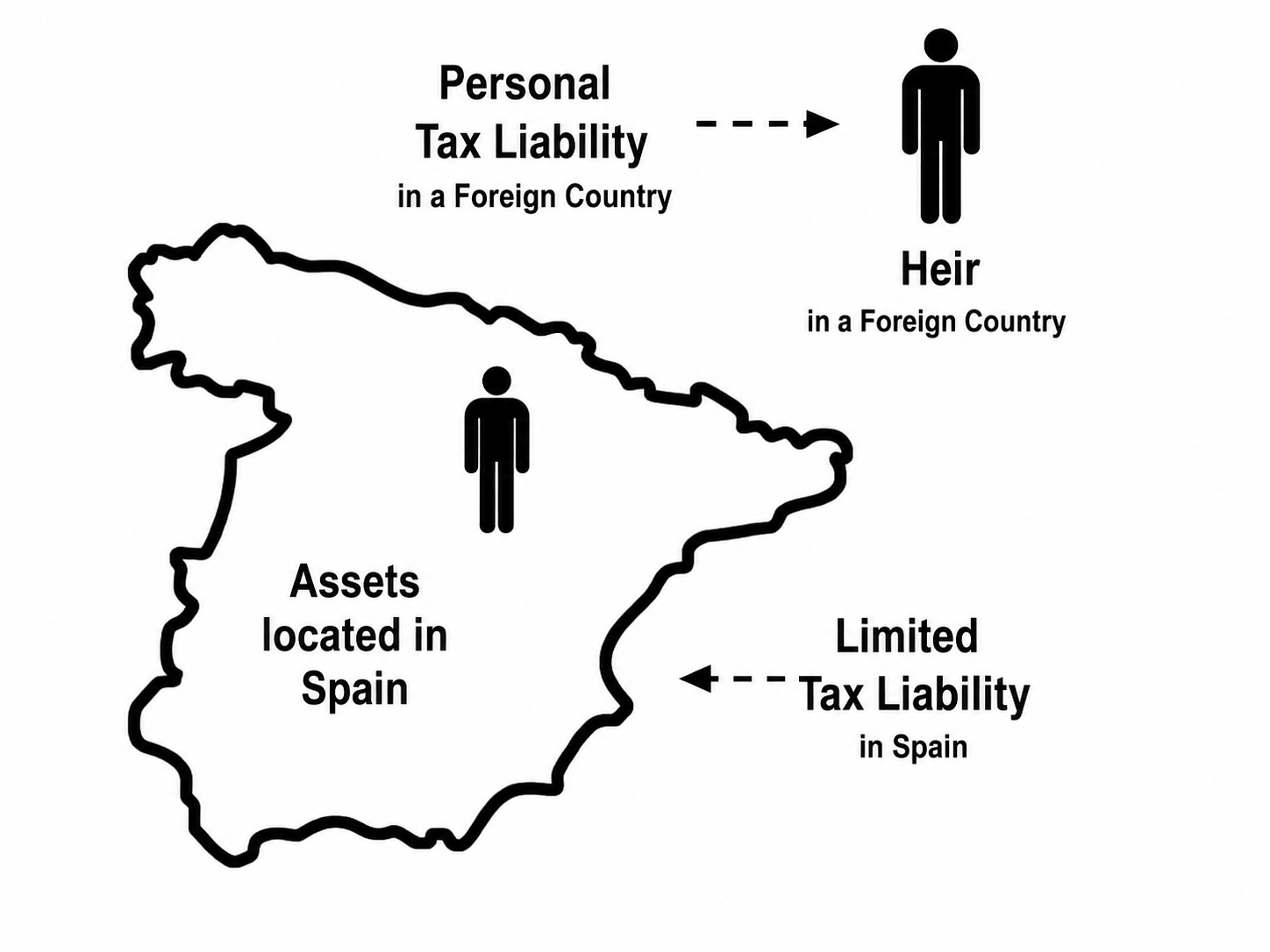
b) The asset-related limited tax liability (obligación real), on the other hand, generally applies to heirs who are not resident in Spain but inherit assets or rights located in Spain. In this case, Spanish taxation is limited to the assets and rights situated or exercisable in Spain. The applicable regional tax legislation is determined in accordance with the statutory connecting factors, taking into account, among other circumstances, the residence of the deceased and the location of the inherited assets.
Assets and rights connected with Spain may include real estate, certain movable assets and rights directly related to property situated in Spain, as well as certain life insurance policies. Taxes paid in Spain may, subject to the applicable German tax rules, be taken into account in Germany in order to avoid or reduce international double taxation.
If a German national residing in Spain leaves a property situated in Spain to descendants residing in Germany, the inheritance of that property will generally be subject to Spanish inheritance tax. If, however, the property is located in Germany, its taxation must be assessed under German tax law. In certain circumstances, inheritance tax paid in Spain may be credited against the inheritance tax payable in Germany. As real estate often represents a substantial part of an estate, appropriate inheritance tax planning can be an effective means of reducing the overall tax burden.
When must inheritance tax be paid in Spain?
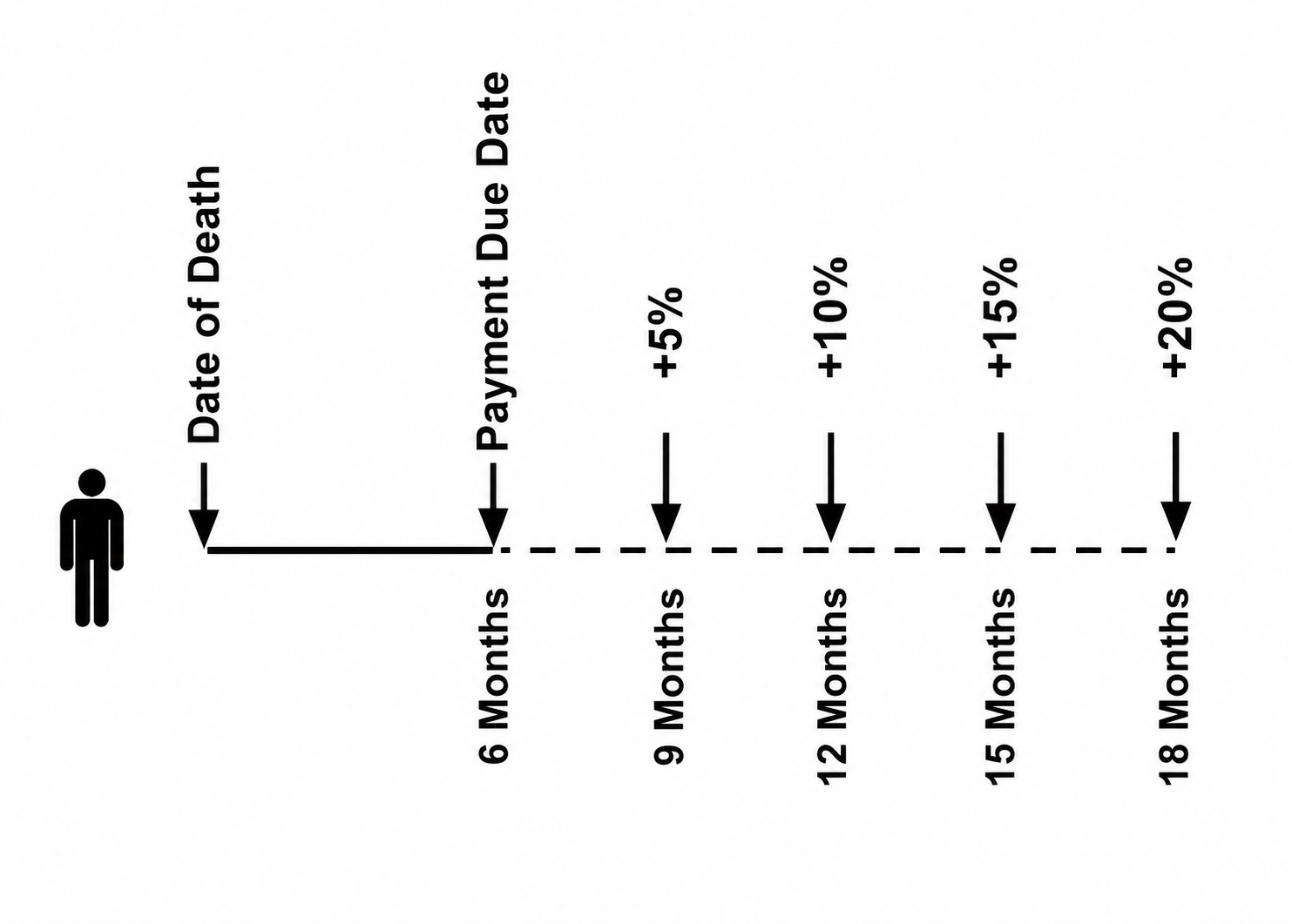
Spanish inheritance tax must generally be filed and paid within six months of the date of death. Particularly where an estate includes real estate, heirs may not have sufficient liquid funds available to pay the entire inheritance tax liability immediately. In such cases, it may be possible to apply for a deferral or payment in instalments, subject to the applicable legal requirements. An extension of the filing deadline may also be requested within the statutory period. Failure to file or pay the tax on time may result in surcharges, interest and, where applicable, penalties in accordance with Spanish tax law.
Tax residence
Tax residence is particularly relevant in inheritance cases connected with Spain, as the regional legislation applicable to the inheritance may depend on the statutory connecting factors. The inheritance tax burden can vary considerably between Spain's Autonomous Communities, since each region provides its own allowances, reductions and tax benefits within the applicable legal framework.
The differences between the Autonomous Communities can be significant. Some regions provide substantial tax reductions or allowances for certain categories of relatives, while others apply different exemptions or reliefs. The inheritance tax liability must therefore always be calculated in accordance with the regional legislation in force at the date of death, taking into account the degree of kinship, the heir's pre-existing wealth and any other relevant circumstances.

Early inheritance tax planning
Although inheritance tax rates and reliefs vary between the Autonomous Communities, there are various exemptions, reductions and planning opportunities that may be available where the relevant legal requirements are met. If these possibilities are considered sufficiently early and an appropriate inheritance tax plan is prepared, the overall inheritance tax burden can often be significantly reduced.
With regard to international taxation, Spanish legislation has evolved considerably in relation to the treatment of residents and non-residents. Following decisions of the Court of Justice of the European Union and subsequent legislative reforms, non-resident heirs may, in the circumstances provided for by law, benefit from the inheritance tax legislation and tax advantages of the relevant Autonomous Community. Inheritance tax planning may therefore be particularly relevant both for persons resident in Spain and for persons resident abroad who own assets in Spain.
Appropriate inheritance tax planning makes it possible to take full advantage of the available tax benefits and thereby reduce the tax burden within the applicable legal framework. Further information can be found in our article: "Spanish Inheritance Tax Planning".
Our law firm will be pleased to analyse your individual circumstances, handle the necessary administrative procedures on your behalf and assist you with the preparation and filing of the relevant tax returns. Should you require further information or have any specific questions regarding Spanish inheritance tax or cross-border inheritance matters, please feel free to contact us by email or telephone.
Author:

Christoph Sander
Lawyer and Tax Advisor
CEO, Partner, Director
info@sspartners.es
Tel: (+34) 951 12 13 06
Facebook I LinkedIn I Amazon
Stay informed! Follow us on:


 (+34)
(+34)